
How to Apply for a Solo Parent ID in the Philippines (2026 Updated Guide)
Are you a single parent? If you’re the one pays for milk, drives your child to school, and stays up all night when they’re sick—all without the help of a partner—there’s government ID for that. It’s called the Solo Parent ID, and you may be wondering if you qualify for one.
What most people don’t realize is how comprehensive the coverage is. The law doesn’t just apply to widowed or separated parents. It includes OFW spouses, guardians raising a relative’s child, single parents, and even pregnant women without a supporting partner, all with their set of documentation requirements.
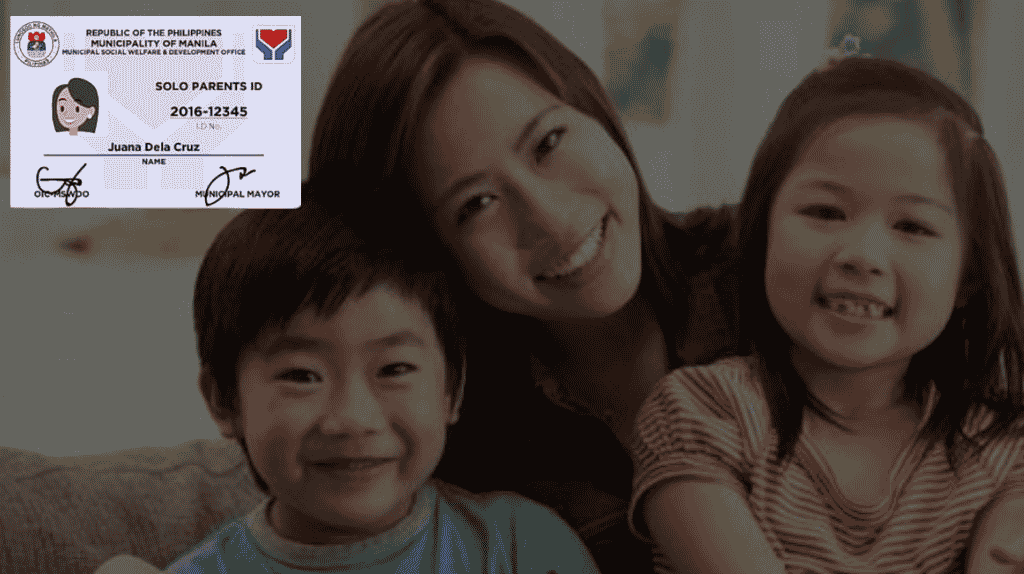
This guide will cover the qualifications for the Solo Parents ID, the documents that the DSWD requires based on your circumstances, the process of submitting your application, and the benefits you can receive upon approval.
What is the Solo Parent ID?
Under Republic Act No. 11861, or the Expanded Solo Parents Welfare Act, which was enacted into law by President Rodrigo Duterte in 2022, the solo parent who is rearing a child primarily or entirely independently and offers benefits such as paid leave, school subsidies, and discounts on essentials.
The solo parent ID is applied for and processed through the municipal social welfare and development office of your local government unit (LGU). No online application website has been established as of the time of this writing.
Who is eligible for a solo parents ID?
Under RA 11861, you may qualify as a solo parent if you are:
- A mother alone raising a child born as a result of rape, even without a definitive conviction.
- A parent whose spouse has died
- A parent’s spouse has been arrested or imprisoned for at least three months
- Parents whose spouse is physically or mentally incapacitated.
- A parent who has been legally or de facto separated from a spouse for at least 6 months and has sole custody and support for the child.
- A parent with sole custody following an annulment, declaration of nullity of marriage, or divorce.
- A parent who has been abandoned by a spouse for a minimum of six months
- A spouse, family member, or guardian of a low- or semi-skilled overseas Filipino worker (OFW) who has resided abroad continuously for a minimum of 12 months.
- A single mother or father parenting a child
- A legal guardian, adoptive parent, or foster parent who solely cares for a child.
- A relative within the fourth degree of consanguinity or affinity who took over parental care because the parents died, disappeared, abandoned the kid, or had been absent for a long period
- A pregnant mother is exclusively responsible for supporting and caring for her unborn child.
Note: The DSWD has stated that solo parents who are currently cohabiting with a partner, whether married or not, and regardless of the gender, do not qualify. If you live with someone in a partner-like relationship, your application may be denied.
You will also require a qualifying dependent who is single, jobless, or under the age of 22. If your dependent is over the age of 22, they will still count if they have a physical or mental disability or are medically incapable of supporting themselves.
Also read: Download National ID Digital
Documentary Requirements (Based on your situation)
Every applicant, regardless of category, needs the following three primary documents:
- PSA-issued birth certificate for the child or dependent.
- A sworn declaration stating that you do not have a live-in spouse or partner, or that you are the sole caregiver of the child.
- A sworn affidavit from a barangay authority confirms your residency.
Aside from the documentation indicated above, you must additionally submit the following extra requirements based on your specific situation:
|
Category (Specific Situation) |
Supporting Documents Required |
|
Spouse passed away |
Marriage certificate; death certificate of the spouse |
|
Spouse imprisoned |
Marriage certificate; document of confinement establishing at least three months’ imprisonment |
|
Spouse has physical/mental disability |
Marriage certificate, medical records, medical abstract, certificate of confinement, or valid PWD ID. |
|
Legally or de facto separated |
Marriage certificate; judicial decision of legal separation (or affidavit verifying the separation agreement, in de facto circumstances). |
|
Marriage is annualized or declared null |
Marriage certificate; legal decree declaring marriage null and void. |
|
Abandoned by spouse |
Marriage certificate, affidavit proving abandonment, and police or barangay certification confirming it. |
|
Spouse is a low-income OFW borad |
Marriage or birth certificate establishing relationship to the OFW; POEA standard employment contract; photocopy of OFW’s passport with immigration stamps; proof of the OFW’s income; and certificate of employment proving at least 12 months of overseas work |
|
Relative (within 4th civil degree) raising the child |
Death certificate or proof that no parents/guardian can care for the child; police or barangay records verifying the scenario; proof of relationship to the child’s biological parent or guardian |
|
Legal guardian, adoptive, or foster parent |
Court order of legal guardianship; adoption decree from the National Authority for Child Care; placement papers from DSWD/NACC. |
|
Pregnant without partner support |
Medical certificate or pregnancy report |
|
unmarried parent |
Certificate of No Marriage (CENOMAR) |
If you want to apply for financial help in addition to the ID, such as discounts and cash subsidies, you must also provide proof of low income. Unemployed applicants must submit a sworn declaration showing that they are currently without a job or source of income. Employed candidates with modest incomes may additionally be required to provide an income tax return, certificate of employment, social case study report, evidence of income, or certificate of indigency.
How to Apply for a Solo Parent ID
Step One: Confirm Your Category and Prepare Documents
Please refer to the table above to identify your specific circumstance, and prepare both the primary and case-specific supporting documentation. For example, if you are an unmarried parent, prepare your CENOMAR along with the primary documents (birth certificate and sworn affidavit)
Please bring original copies and photocopies of all your documents.
Step 2: File at the Local Solo Parent Office.
Submit your application to your LGU’s solo parent office, or your local social welfare and development office if your area lacks a dedicated solo parent desk.
A social worker will verify your paperwork, ensure they are complete, and enter your application into the Registry of Solo Parents, assigning it a case number. Keep this case number since you may need it for future follow-ups.
Step 3: Wait for processing
Approved applications are usually released within 30 days of filling. The Solo Parent ID is valid for one year and renewed thereafter.
If your application is still being processed after 30 days, do not simply wait it out. Please follow up directly with the office where you submitted your application and provide your case number.
If your application was rejected because your category was unclear, ask the social worker whose group they placed you in. Requirements differ slightly among LGUs, so please call their office to clarify your position before filling out your application in person.
Step 4: Access Your Benefits
Once you have your Solo Parent ID, you may start taking advantage of the benefits stated below. Some benefits are automatically awarded, while others need you to provide proof of low income.
Benefits of Having a Solo Parents ID
- 7 days of paid parental leave per year for employed solitary parents who have served for at least 6 months. Unused leave does not carry over or convert to cash, so use it within one year.
- Educational assistance for your children, including scholarships, educational subsidies, and other government-sponsored initiatives.
- Discount on selected product and service: Income eligibility is determined by the implementing agencies.
- A monthly ₱1,000 subsidy in various places, depending on your local government’s policy. Not every city or municipality handles things in the same way.
- 10% discount and VAT exemption on medicine, milk, and food supplements for single parents earning ₱250,000 or below annually witha child aged or below.
Frequently Asked Questions
The Solo Parent ID is valid for one year from the date of release. You’ll need to renew it later to continue getting benefits, and the renewal process usually requires you to reconfirm your solo parent status at the same office where you originally applied.
No. The DSWD has stated that solo parents who dwell with a partner, whether married or not, and regardless of gender, are not eligible for Solo Parent ID.
If your local government unit does not have a specialized solo parent desk, you can submit your solo parent ID application to the local social welfare and development office.
Dependents over the age of 22 may still qualify if they have a physical or mental handicap or are unable to support themselves. To establish your case, you will need to present supporting medical documents.
Not necessarily. The monthly stipend is dependent on your local government unit’s budget and policy; therefore, availability varies by city or municipality. Having the Solo Parents ID allow you to apply for the subsidy when it is available, but it is not a national grant.
Wrapping Up
Being a single parent is difficult enough, especially given the rising expenses of living nowadays. Fortunately, the government developed the Solo Parent ID, which provides benefits and privileges to single parents who are struggling to raise their children on their own. If you’re a single parent, now’s the time to apply for one.
If you have any questions or concerns regarding the solo parents ID, contact your local solo parent office or call the DSWD at (02) 8931-8101 or email inquiry@dswd.gov.ph.


One Comment